Decisions involving Indigenous territories have profound impacts on cultures, ways of life, biodiversity, and the future of entire communities. For this reason, the principle of Free, Prior, and Informed Consultation (FPIC) is a fundamental pillar to ensure that these processes are carried out in a fair, transparent, and respectful manner.
Internationally recognized by Convention 169 of the International Labour Organization (ILO) and by various Indigenous rights frameworks, FPIC ensures that Indigenous peoples have the right to fully participate in decisions that affect their territories, natural resources, and ways of life.
In practice, FPIC means that any initiative—whether environmental, technological, economic, or infrastructure-related—must be discussed directly with communities in a clear, accessible way and within a timeframe that allows for collective reflection.
Community assemblies as spaces for decision-making
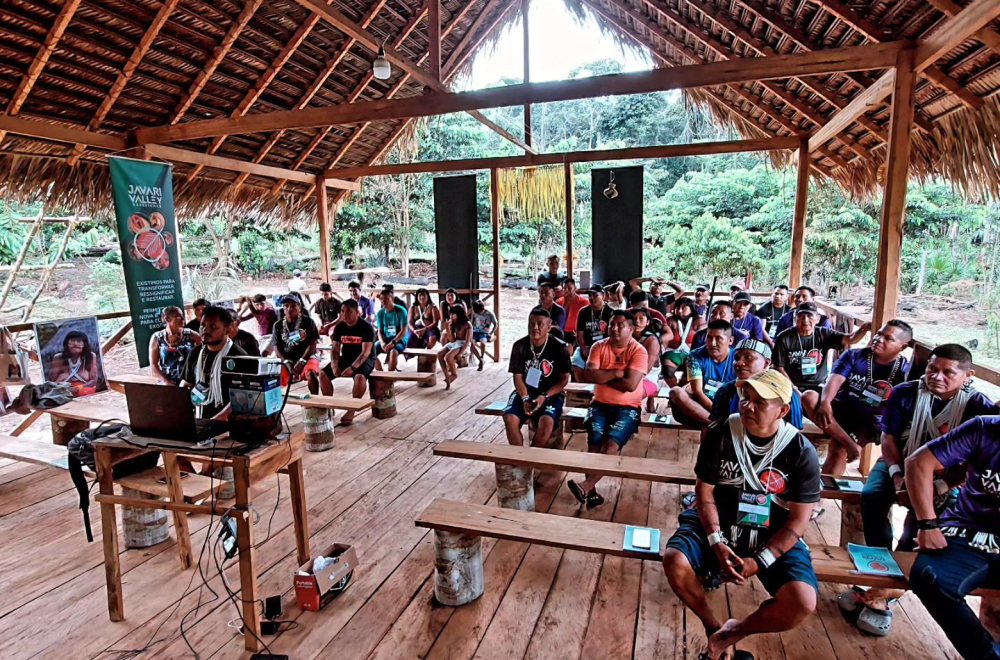
In Indigenous communities, important decisions are often made through community assemblies, where leaders, elders, youth, and families participate in dialogue and consensus-building processes.
These gatherings are essential spaces for listening and collective construction. Information is shared, questions are discussed, and different perspectives are considered before decisions are made.
In vast and hard-to-reach territories, organizing such meetings requires complex logistics, cultural sensitivity, and a deep understanding of each community’s social dynamics.
Organizing consultations in remote territories
4est4all has a specialized team dedicated to organizing assemblies and community meetings in remote Indigenous territories, ensuring that consultation processes respect FPIC principles and traditional decision-making practices.
This work includes:
– logistical coordination in hard-to-access regions
– engagement with Indigenous leaders and organizations
– translation and cultural adaptation of information
– facilitation of community dialogue
– transparent documentation of decision-making processes
When conducted properly, these consultations enable communities to evaluate proposals with autonomy and confidence, ensuring that decisions impacting thousands of lives and millions of hectares of forest are made collectively and legitimately.
Decisions that shape the future of forests
Community assemblies are not just meetings—they are spaces where the future of territories is defined.
It is within these gatherings that communities decide on conservation projects, technological initiatives, territorial protection strategies, and pathways for sustainable development.
Ensuring that these processes respect Free, Prior, and Informed Consultation is essential to strengthening Indigenous governance and building lasting solutions for the protection of tropical forests.