In one of the most remote and strategically important regions of the Amazon, an unprecedented initiative is transforming how Indigenous communities access information, technology, and tools for territorial protection.
In the Vale do Javari —the second largest Indigenous Territory in Brazil and home to diverse Indigenous peoples, including uncontacted communities—one of the largest connectivity initiatives ever implemented in remote areas of the Amazon rainforest has been carried out.
The initiative was coordinated by Flora Dutra and Enoque Marubo, president of the Kapyvanaway Association, in collaboration with Allyson Reneau and Beandon Weaver, bringing together Indigenous leaders, technology partners, and international support networks to deliver communication infrastructure to historically isolated communities.
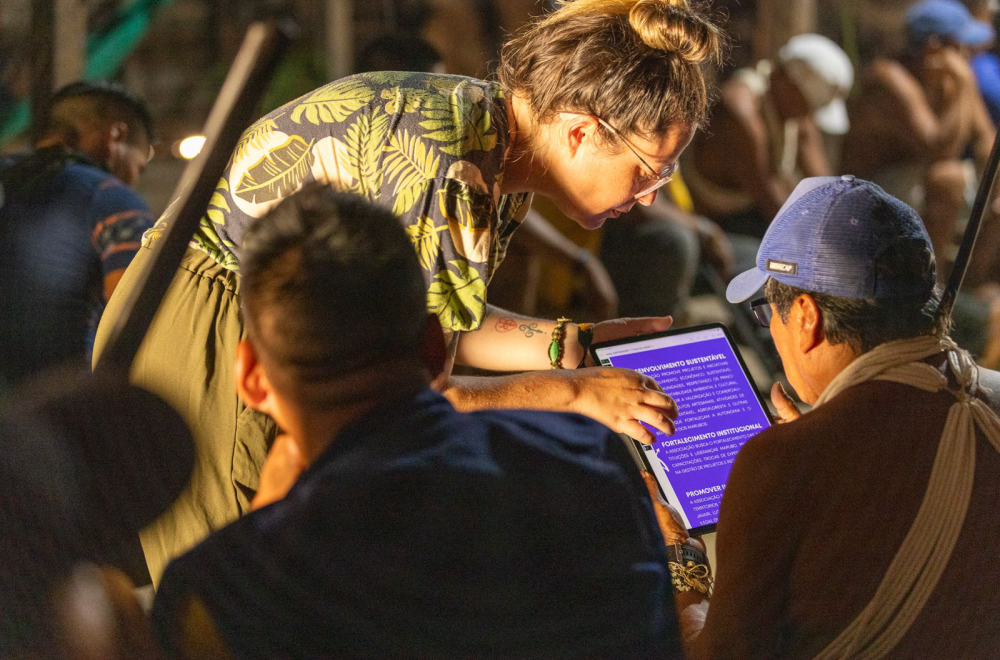
The project provided satellite connectivity infrastructure, digital equipment, and technological training to villages across the territory, enabling communities living deep within the forest to access essential tools for communication and territorial protection.
Connectivity as a tool for territorial protection
In the Amazon, connectivity is not just about internet access. For communities in the Vale do Javari, it has become a strategic tool for territorial protection, environmental monitoring, and strengthening Indigenous autonomy.
With access to connectivity, leaders and territorial agents are now able to:
– report invasions and illegal activities in real time
– share environmental monitoring data
– strengthen coordination between villages and Indigenous organizations
– access digital education and training tools
– engage directly with national and international support networks
This infrastructure also enables the integration of satellite data, community-based monitoring, and digital territorial registry systems, expanding the capacity to protect one of the most biodiverse regions on the planet.
A strategic region for global climate balance
The Vale do Javari spans approximately 8.5 million hectares of preserved tropical forest, representing one of the most important areas in the world for biodiversity conservation and global climate balance.
The region is home to dozens of Indigenous peoples and has the highest known concentration of uncontacted Indigenous groups on the planet.
Protecting these territories is essential not only for the communities who live there, but also for the stability of the Earth’s climate.
Technology aligned with traditional knowledge
This connectivity initiative demonstrates that technology and traditional knowledge can work hand in hand.
By integrating digital tools into existing Indigenous governance systems, communities expand their ability to protect the forest, document knowledge, and strengthen their own organizational structures.
The project also opens pathways for new initiatives focused on Indigenous digital education, community-based environmental monitoring, and territorial innovation—always respecting the autonomy and cultural protocols of each people.
A model for other tropical forests
The experience in the Vale do Javari is becoming a reference for similar initiatives in other tropical regions around the world.
Projects inspired by this model are already being discussed for Indigenous territories in the Amazon, the Congo Basin, Indonesia, and Central America, creating an international network of connectivity for the protection of tropical forests.
By connecting historically isolated territories to 21st-century technological tools, this initiative demonstrates that the future of forest protection lies in Indigenous leadership combined with technological innovation and international cooperation.